Clicking a link to eBay [or other affiliations] may result in a referral commission being paid if a purchase is made.
As I’ve experienced the 212 now for a number of years, here’s a compiled list of common problems and a minor insight into them. Based upon my experience at an independent specialist + forums / Facebook. If you can add to the list, please comment and will happily add to it.
This list is quite big, but these are by no means bad cars. Some are generalised and could occur on any car but notes will help out with the 212 E-Class.
There are a few common ones, but most faults are normally due to poor servicing schedule and improper maintenance or just age and mileage.
OM651 (2.1 CDI 4-Cyl Diesel)
| Fault | Summary |
|---|---|
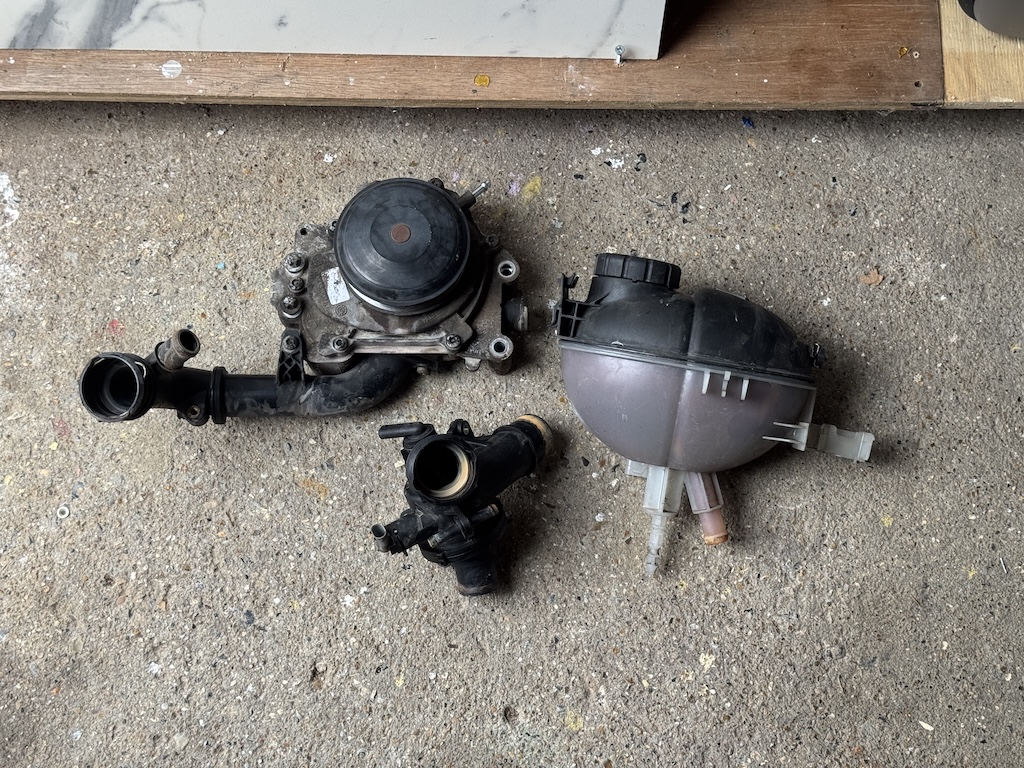
| Coolant pump failure | Water pump bearing/seal failure causes coolant leaks and overheating. Coolant visible around front of engine. Low coolant level warning |
| Coolant thermostat failure | Causes slow warm-up or overheat. Stuck open = poor MPG; stuck closed = overheating. On higher mileage engines have seen bits of the plastic housing break off and get wedged in the thermostat. Overheating. Slow warm up. Occasionally EML light if triggers a fault. |
| Differential pressure sensor failure | Affects DPF regen accuracy. Can trigger limp mode or excessive regens. Also check pipes going to DPF for splits. Advise removing and physically inspecting. Limp mode. Engine light |
| Split intercooler / boost pipes | Cracked/split plastic or rubber hoses cause loss of turbo boost and associated boost faults. Advise removing and physically inspecting as have seen some pipes with splits that can only be seen when removed. Check for sources of oil contamination that leads to degradation of the rubber, externally and also check inlet system not breathing excessive amounts of oil. Limp mode. Engine light. Hissing noises under load. Lack of power |
| Inlet manifold broken bolts | Heat/corrosion breaks inlet manifold bolts, causing associated boost faults and symptoms. This can be awkward to diagnose as only leaks boost under higher load. Typically on earlier OM651 engines. The bolts are built into the manifold and cannot be replaced on their own. Limp mode. Engine light. Hissing noises under load. Lack of power |
| EGR cooler coolant leak | Internally cracked cooler leaks coolant into EGR system. White smoke and coolant loss. Low coolant level warning |
| Fuel filter housing coolant leak | Common. Fuel filter housing has coolant leak where it joins to cylinder head. See my post here Coolant leaking around inlet manifold area. Low coolant level warning. |
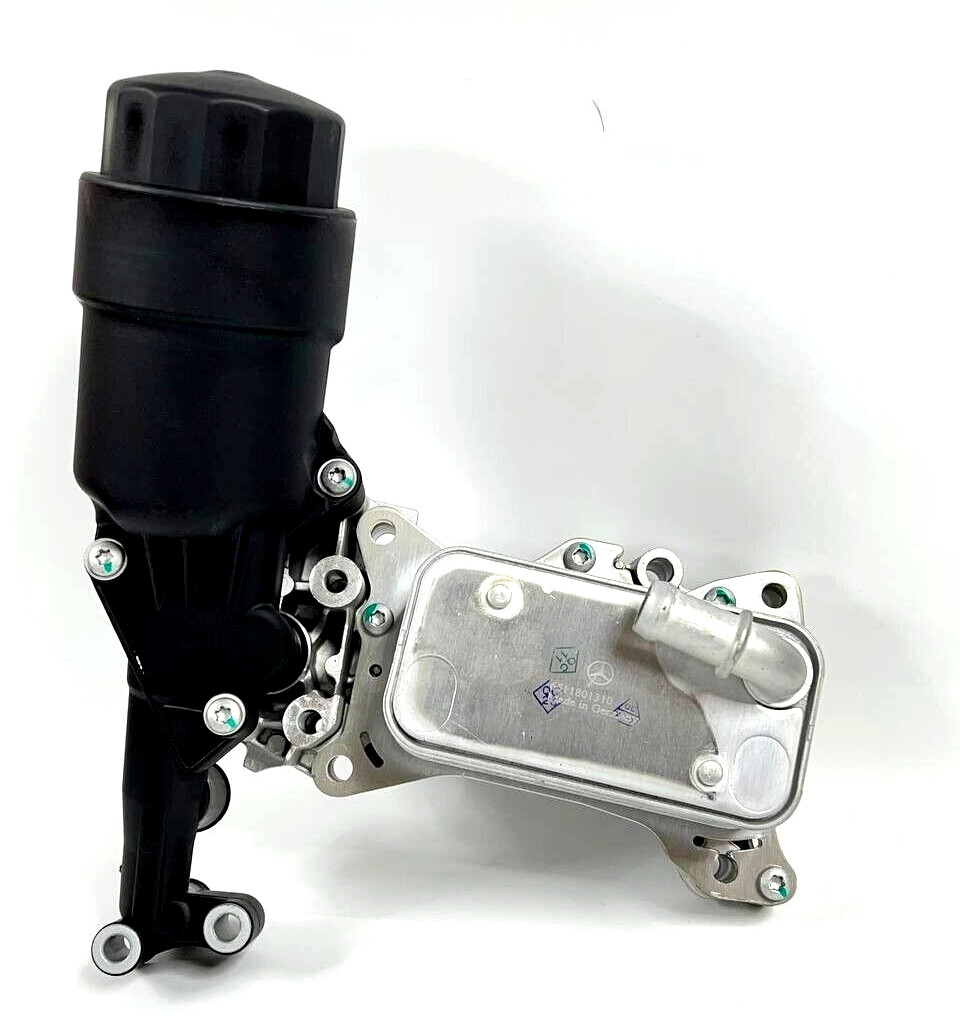
| Oil cooler / filter housing external leak | Filter housing & oil cooler are a combined unit. Caused by gasket or housing warp. On early models with mechanical power steering can be a pain to replace as not much room around it. Oil visible near filter area and towards bellhousing on that side of engine |
| Oil cooler internal leak | Oil and coolant mix due to internal cooler failure. Have seen this quite a few times. Milky fluid in expansion tank |
| Timing chain stretch / tensioner wear | Common. If left, can cause severe engine damage (cam timing jump). Unlikely but may be worth checking that oil filter is not blocked and or oil sump strainer not blocked. Rattle on cold starts |
| Inlet pressure sensors failure | Misreads pressure → turbo boost issues or limp mode. Usually fixed by sensor replacement. There are a few pressure sensors at various points on the air intake path – be sure to get the right one. Limp mode. Engine light. Lack of power |
| Air mass sensor failure | Various fault codes and associated engine light. Sensor contamination is typical. Make sure you complete the adaption process after the sensor is replaced. Use a genuine sensor. Ensure air filter is clean. Limp mode. Engine light. Lack of power |
| Injector blow-by (“black death”) | Failed copper seals leak gases; tar buildup, injector chuffing noise, fuel smell. Do not leave this for long as the longer its left, the more its going to cost you. Tar buildup around injectors and rocker cover. Chuffing noises. Diesel smell in cabin |
| High-pressure fuel pump failure | Can cause no-start, poor performance. Associated low pressure fuel system faults. When pump breaks up can end up with metal swarf in fuel system. Perhaps not so much of a common problem but more lack of maintenance. (fuel filter replacement or cranking with no fuel to pump) Limp mode. Engine light. Lack of power. Non start |
| Glow plug or control unit failure | Poor cold starts or misfire. Control unit failure can affect multiple plugs. Engine light / Glow light. Poor cold starting |
| Swirl flap motor failure | Reduced performance, Often needs intake manifold replacement. Engine light. Poor performance |
| DPF clogging / poor regeneration | From short trips (questionable) or sensor faults. Leads to excessive back pressure in exhaust. Check sensors working OK and pipes from sensor to exhaust OK. Engine light. Limp mode |
| Crankshaft position sensor failure | Crank-no-start or sudden stall. Often no fault codes logged and occurs when hot. |
| Adblue faults | Triggers limp mode or countdown to no start. Typically NOX sensor related faults. May require replacement NOX sensor/s and software updates. Much talk around software update causing performance issues. |
OM642 (3.0 V6 CDI Diesel)
| Fault | Summary |
|---|---|
| Coolant thermostat failure | Water pump bearing/seal failure causes coolant leaks and overheating. Coolant visible around front of engine. Low coolant level warning |
| Differential pressure sensor failure | Affects DPF regen accuracy. Can trigger limp mode or excessive regens. Also check pipes going to DPF for splits. Advise removing and physically inspecting. Limp mode. Engine light |
| Exhaust back pressure sensor failure | Misleads ECU → incorrect EGR/regen behavior, reduced performance. Where the sensor threads in, check that it is not clogged up with carbon internally – this will cause false readings as the pressure is not getting to the sensor. Limp mode. Engine light |
| Timing chain wear / stretch | If left, can cause severe engine damage (cam timing jump). Unlikely but may be worth checking that oil filter is not blocked and or oil sump strainer not blocked. Less common than on OM651. Typically higher mileages. Rattle on cold starts. Poor starting (continuously cranks) |
| Injector blow-by | Failed copper seals leak gases; tar buildup, injector chuffing noise, fuel smell.]Do not leave this for long as the longer its left, the more its going to cost you. Tar buildup around injectors and rocker cover. Chuffing noises. Diesel smell in cabin |
| Air intake pipe to turbo seals (red seals) | Common. Seal failure (swelling from oil breathed in inlet system) allows boost leaks, oil seepage near turbo inlet. Oil can leak onto inlet shut off motor and cause failure. Limp mode. Engine light |
| Turbo boost pipe seal failure (green o-ring) | Typically this seal goes hard. On some models you need to remove this pipe to replace the fuel filter and it leaks afterwards. Causes boost leaks and associated issues. |
| Split intercooler / boost pipes | Cracked/split plastic or rubber hoses cause loss of turbo boost and associated boost faults. Advise removing and physically inspecting as have seen some pipes with splits that can only be seen when removed. Check for sources of oil contamination that leads to degradation of the rubber, externally and also check inlet system not breathing excessive amounts of oil. Limp mode. Engine light. Hissing noises under load. Lack of power |
| Air mass sensor failure | Part of the Y pipe that connects air filters to turbo inlet. Typically a air temperature fault occurs which is built into the unit. Various fault codes and associated engine light. |
| Oil cooler seals leak | Very common. Seals shrink and leak engine oil into engine V area. Messy and labour-intensive repair. |
| Swirl flap motor or linkage failure | Intake swirl flaps stuck or disconnected. Triggers various codes and reduced performance. Can be blanked off. Engine light |
| Turbo actuator failure (electronic) | Poor boost control, shuddering on acceleration when cold. Common in high-mileage OM642s. Engine light. Limp Mode. |
| Glow plug control module failure | Poor cold starts or misfire. Control unit failure can affect multiple plugs. Engine light / Glow light. Poor cold starting |
| Crankshaft position sensor failure | Crank-no-start or sudden stall. Often no fault codes logged and occurs when hot. |
| Adblue faults | Triggers limp mode or countdown to no start. Typically NOX sensor related faults. May require replacement NOX sensors and software updates. Much talk around software update causing performance issues. |
Petrol Engines (M271, M276, M278)
| Fault | Summary |
|---|---|
| M271 timing chain stretch | Chain wears prematurely, causing rattle and cam/crank sync errors. |
| Ignition coil failures | Misfires under load or cold. Easy fix but common issue. |
| Valve cover gasket oil leaks | Oil seepage around top of engine, common with age. |
| M276 crankcase ventilation failure | PCV diaphragm fails, leading to vacuum leaks or oil consumption. |
| M278 turbo intercooler leaks | Loss of boost or oil residue near intercooler. |
| Oil consumption on high-mileage M271/M276 | Due to piston ring or valve stem wear. |
| Spark plug fouling / misfires | Caused by short trips or aging coils. Triggers EML and rough idle. |
Transmission (5G/7G-Tronic)
| Fault | Summary |
|---|---|
| Conductor plate / valve body faults ( 7 Speed) | Failure of speed sensors on gearbox electrics plate. Causes harsh shifting, limp mode. Early units especially affected. The gearbox control unit (aka TCU, VGS plate, conductor plate) is attached to the valve body inside the gearbox. It is coded to the car and if fitted with a new one, Mercedes exchange unit or a unit from another car it must be reprogrammed. (yes you can SCN code a 2nd hand one) Various companies offer repair of these units if you take your one out (and therefore will not need to be reprogrammed) Worth noting that there is a very early version of the 7 speed box that has a valve body that will be incompatible with later control units. Ive only ever come across this once, was a very early 212. |
| Leaking pilot bushing connector (5 Speed) | Allows fluid into TCU & wiring loom — can cause transmission faults. |
| Torque converter shudder | Juddering under light acceleration. Often misdiagnosed as engine issue. If the torque converter has an issue it is possible there is an oil supply issue to it which may mean there is an issue with the gearbox. |
| Harsh or delayed gear shifting | Valve body wear, solenoid issues, or adaptation errors. |
| Gearbox pan / cooler line leaks | Common with age or lack of servicing. Cheap non genuine gaskets normally fit poorly. |
| Putting the wrong gearbox oil in | Not really a common problem, but something common to a degree that we saw in the workshop. Further details to follow. |
General / Chassis / Electrical
Body & Interior
| Fault | Summary |
|---|---|
| Front seat base cover splitting | Stitching or material wears on outer bolsters and seat base. |
| Armrest cover wear | Common due to use. Often peels or cracks. |
| Steering wheel buttons wear | Rubber coating wears off, especially on high-use buttons. |
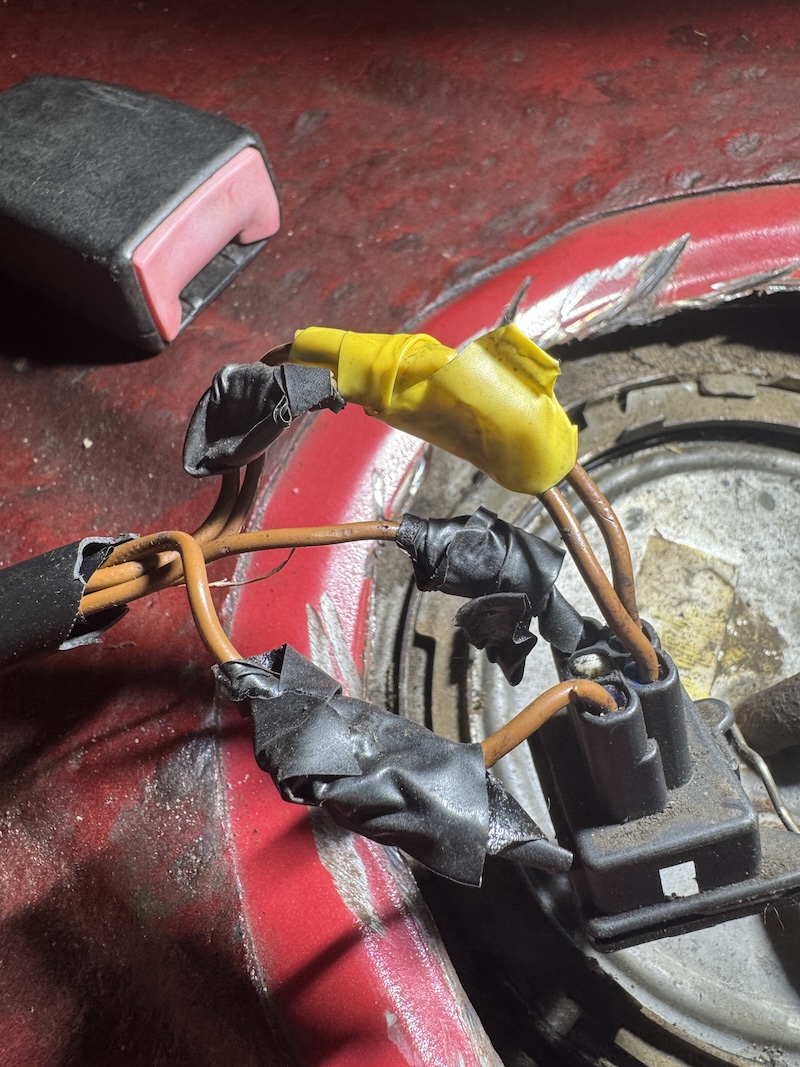
| Seat recognition pad fault | Passenger seat pad failure causes airbag light and disables SRS. |
| COMAND controller faults | Rotary-style controller in centre console becomes unresponsive or jumpy. |
| Instrument cluster pixelation | Early models suffer fading or dead pixels. |
| Door seam / wheel arch rust | Common behind rear doors or front arches. Cosmetic but persistent. |
| Water ingress in boot | Tail light seals or vents leak water into boot floor. |
| Heater blower motor failure | Fan stops blowing or only works intermittently. |
Suspension / Steering / Chassis / Brakes
| Fault | Summary |
|---|---|
| Rear subframe corrosion | UK & EU models most affected. Often fails MOT/inspection. Various reports of being replaced FOC at dealers. Little info from MB. |
| Airmatic suspension faults | If equipped. Estate models have rear air suspension. Air bags leak as they get older as would any rubber deteriorating. If left sat for a period of time this can make the situation worse. If the struts are rising or there own, check; level sensor rods are connected to level sensors. Check air pressure relief valve on pump is working and wiring to it is not corroded. Air line leaks from rubbing on chassis. Compressors wear out if faults not rectified |
| Front control arm bush wear | Clunks or vague steering. Common around 70–100k. |
| Ball joint wear | Knocking over bumps or vague handling. Check antiroll bar links and ball joints first. |
| Handbrake release handle | Breaks off occasionally. Easily replaced. |
| Rear shock absorber mounts corroding | Rear shock absorber top mounts corrode. Causes knocking noises. Not visible unless removed to check. |
Electrical / Electronics
| Fault | Summary |
|---|---|
| Steering lock inoperative | ELV module fails → no start, steering won’t unlock. Can be repaired. Coded to car. |
| Ignition switch failure | Key won’t turn or no power. May need EIS module. Can be repaired. Coded to car. |
| Parking sensor (PTS) failure | Constant beep or dead zones. Sensors corrode underneath paint. Occasionally wiring corroded inside bumper / plug. |
| Reverse camera failure | Blurry or black screen. Common in facelift cars with NTG 4.5. |
| COMAND/NTG head unit failure | Freezes or reboots |
| Headlight control module failure (ILS) | Adaptive lighting failure or DTCs. Often water ingress due to crack in lens / lamp unit. |
| Alternator voltage regulator failure | Low voltage, battery light,. Brushes / slip ring wear out around 300,000 miles. Can be replaced but requires dissasembling alternator |
| TPMS sensor failures | Sensor battery dies or loses communication. Warning light for tyres. Normally at around 10 yrs old. |
Views: 885
One thought on “W212 S212 E Class Common Problems”