Note, Focused around Mercedes Benz, but may well be relevant to other brands.
Intro
One thing that really grinds my gears is seeing customers charged more than Mercedes-Benz retail for parts. It damages the trade, the garage reputation, MB reputation & in some cases costs both parties more in the end.
Depending on your circumstances you may agree or not.
Garage owners will highly say that parts profit is part of their bottom line – it certainly is. Most garages may get 10 to 20 percent of genuine retail whereas the margins can be much higher if using aftermarket.
From a customer perspective, the ceiling should be the retail price. Ive spent enough time within service and parts, and researching parts prices for this site that I know what’s right and what’s not – but what if you don’t? And the majority of customers won’t have a clue.
Customers want a good price, fast turnaround and no issues after.
(Customer is always right you know, oh and guess what, I’m going on holiday tomorrow so it needs to be fixed)!
Receiving a parts quote that’s higher than Mercedes-Benz retail raises a few questions. Has the dealer price actually been checked? Is the garage relying on an aftermarket supplier? Or is the additional margin simply being used to cover overheads?
In most cases, I struggle to justify choosing aftermarket over genuine Mercedes-Benz parts. Genuine parts offer correct fitment, proven quality and reliability, and if a part has been revised, you’ll receive the latest version. In some cases you actually receive more than the aftermarket equivalent, yet the dealer price is still very competitive.
The single down side to Genuine parts is that if you need to claim a warranty – it will have to go through the dealer network, first for diagnosis at your cost. You may even still have to pay the diagnosis if found faulty. It’s just the way it is.
I recently ended up on the receiving end as a retail customer at a garage—something that doesn’t happen often. And I’ll be blunt: I’d rather pay Mercedes-Benz retail parts and labour than be charged over retail for parts alone.
My Example
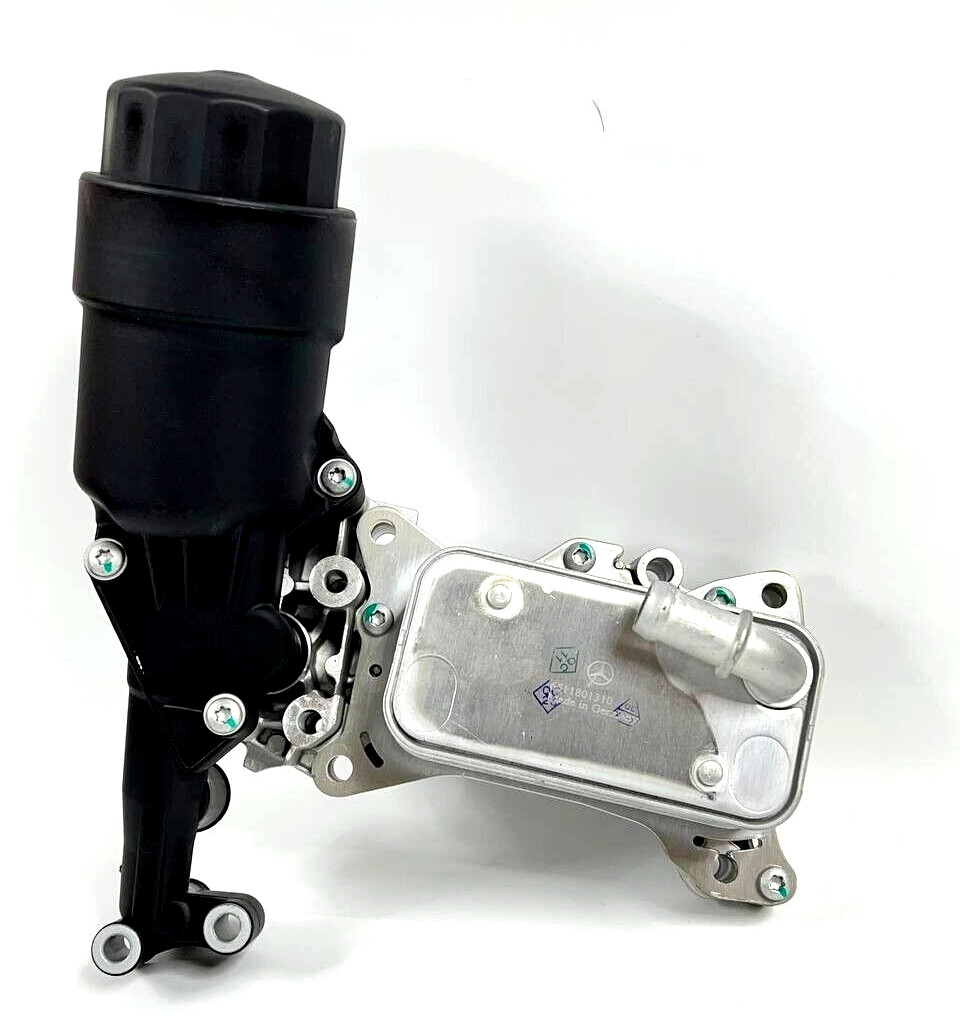
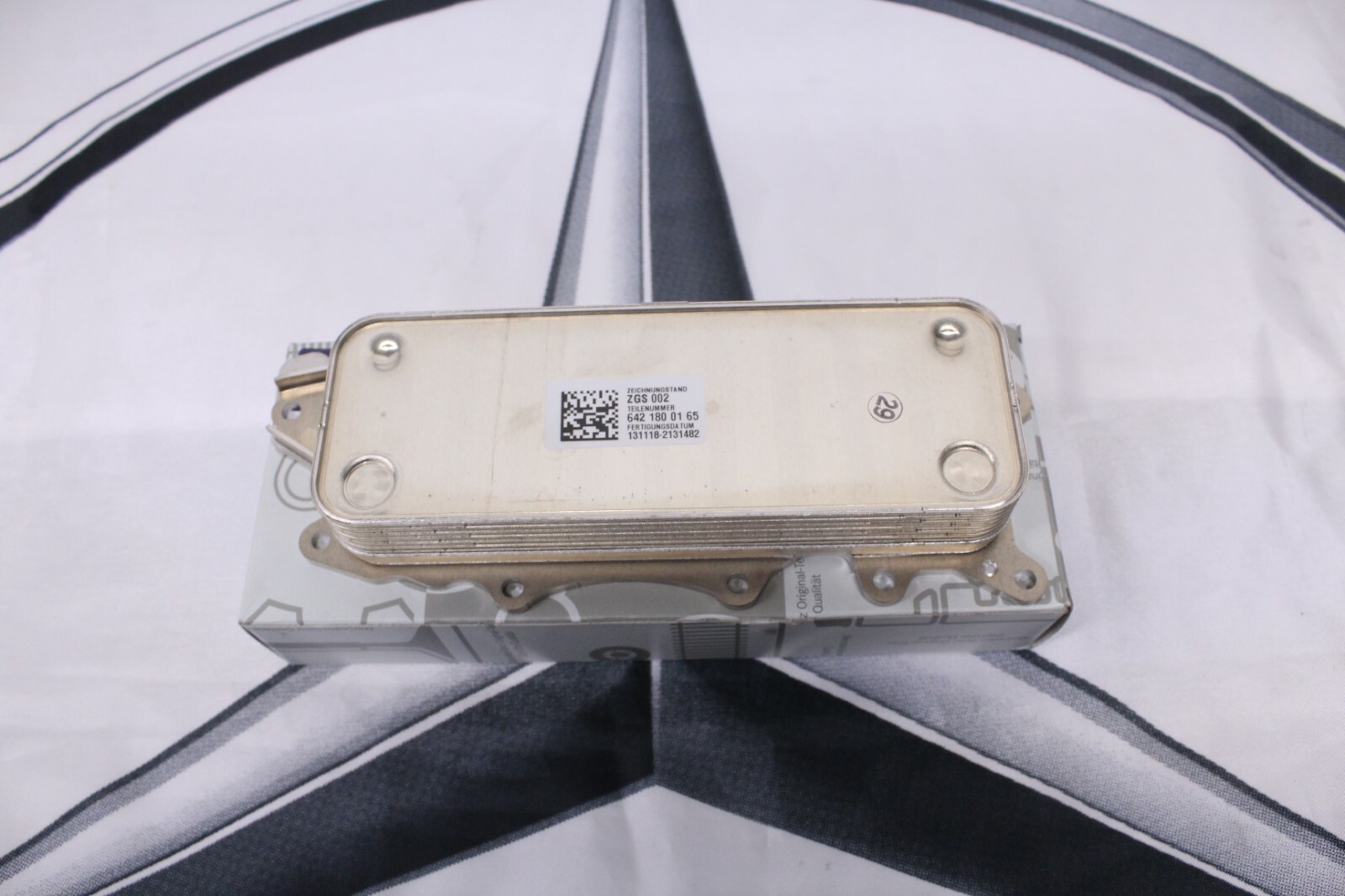
In this example, it’s my own oil cooler on a 2015 E-Class that failed during the heatwave, causing an external coolant leak. All prices below are plus VAT.
Quoted by garage
Aftermarket oil cooler
£175 + VAT
Mercedes-Benz dealer
Genuine oil cooler assembly
£126 + VAT
Includes:
• Oil filter housing
• Seals
• Oil filter
From a customer perspective, this is where the issue becomes obvious—you’re simply paying more for less.
Parts suppliers to blame?
It’s increasingly common to hear that the likes of the 3 letter giants are tearing up the, as we once knew it, trade prices. In some cases retail customers can get it cheaper than trade via their websites.
From the garage perspective, you need to turnaround jobs quickly and with the fast availability they offer it’s hard to refuse what they have. But if the trade price is lacking, the end result is more cost to the end customer.
What’s more, getting hold of someone, let alone a delivery from a dealer can sometimes be challenging – if possible at all.
This isn’t necessarily the suppliers’ fault either. They’re providing convenience, stock and rapid delivery. The problem is when nobody checks whether convenience has actually become more expensive than buying genuine.
So where does that leave us?
The reality is this issue isn’t always down to greed, and it isn’t always down to ignorance either. It’s a mix of time pressure, supplier pricing, availability, and sometimes just a lack of checking alternatives at the point of quoting.
But as a customer, it’s still worth asking the question.
If you’re being charged for parts, it’s completely reasonable to ask:
- Is that genuine or aftermarket?
- Can I have the part number?
- What would it cost from the dealer directly?
Most garages won’t have an issue with that. In fact, many will already be working transparently — but not all pricing structures make it obvious where the margin sits.
The uncomfortable truth
A lot of this comes down to how fragmented parts supply has become. The line between “trade price”, “retail price”, and “online retail price” isn’t what it used to be. In some cases, the traditional advantage of being in the trade has been eroded completely.
So you end up in this strange situation where:
- garages are trying to move quickly
- suppliers are competing on speed and convenience (and are usually far quicker for delivery than dealers)
- customers & garages assume trade pricing is always cheaper from aftermarket suppliers
…and sometimes nobody actually checks the dealer price anymore.
What can garages do better?
Your starting point should be the dealer retail. You don’t always even need to call a dealer.
Nowadays we have the likes of online lookups (partslink24) that will be able to give you dealer RRP within a minute or so. If it’s setup right you can even get a price to you and availability.
It may take a little while to get to grips with it, but once you’re familiar, checking dealer pricing only takes minimal time.
You may still choose not to go genuine, however lets say part ‘x’ is £100 genuine retail, aftermarket is £110 – challenge the price! You want that for £50 to charge the customer £80.
Even if you still choose aftermarket, it’s now a decision made with full visibility of the genuine cost
This isn’t an argument that garages shouldn’t make a profit on parts—they absolutely should. Parts profit is a legitimate part of running a successful workshop. Nor is it an argument that garages should use genuine parts exclusively; there will always be occasions when aftermarket options make better financial sense for everyone involved.
My argument is simply that the starting point should be knowing the genuine dealer price before quoting something more expensive.
Final thought
Charging above retail will always feel wrong to the customer — because intuitively it should be the ceiling, not the starting point.
And while there are often reasons it happens, it’s one of those areas where a simple check can make the difference between a fair job and a frustrating one.
At the very least, it’s worth remembering: in modern parts supply, “trade” doesn’t always mean cheaper — and “genuine” doesn’t always mean overpriced.
Before you quote that next Mercedes-Benz job, spend two minutes checking the dealer price. You might save your customer money, improve your reputation, and even make a stronger case for using genuine parts.
Views: 44
2 thoughts on “Why are some garages charging more than main dealer retail?”